History's NPCsCODEX
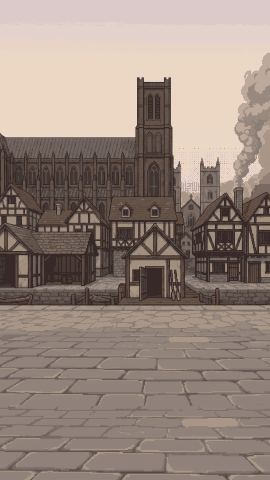
A Thames-side quay in London at dawn: timber-framed houses, Old St Paul's Cathedral behind, smoke rising to the east.
LONDON2 SEP 1666 07:00

EP.04 · Codex entry

The Great Fire of London

London, 1666 · “The Parmesan”

In September 1666 a fire that started in a bakery on Pudding Lane burned for four days and destroyed much of the City of London. The Short follows Will, a fictional Thames waterman, and his daughter Mary through the first day. This is the history behind it.

Field facts

Began
Early hours of Sunday 2 September 16662
Started at
Thomas Farriner's bakery, Pudding Lane2
Burned until
5 or 6 September (accounts differ by a day)3
Destroyed
About 13,200 houses, 87 parish churches and St Paul's Cathedral3
Recorded deaths
Six. The true number is unknown.4
Best witness
Samuel Pepys, whose diary follows the fire day by day1

Real and fictional

Fictional Made up for the Short

  • Will
    Will

    A Thames waterman. He stands in for the Londoners whose names we'll never know.

  • Mary
    Mary

    His daughter, about nine.

Real Documented

  • The fire's start at Thomas Farriner's bakery off Pudding Lane.2

  • Samuel Pepys seeing it at 3 am and going back to bed.1

  • People throwing their goods into the river and into boats.1

  • Firebreaks made by pulling houses down, and the delay in doing it.2

  • Pepys burying his wine and his Parmesan cheese.15

The day, hour by hour

  1. 2 September · early hours

    A fire on Pudding Lane

    Fire broke out at Thomas Farriner's bakery off Pudding Lane.2

    A bakery on Pudding Lane is burning. At 3 a.m., Samuel Pepys saw it and went back to bed.

  2. About 3 am

    Pepys goes back to bed

    Samuel Pepys was woken at about 3 am, judged the fire far enough off, and went back to sleep.1

  3. 2 September · later that day

    Everyone wants a boat

    Pepys saw people flinging their goods into the river and into boats offshore.1 Watermen rowed passengers across and along the Thames.8

    Will, smiling
    WILL

    Everyone wants a boat today. Good fares on a Sunday!

  4. 2 September · midday

    Wind and sparks

    A strong wind carried the fire. On the river, Pepys was caught in a "shower of fire drops".16 Pulling down houses to make firebreaks was the usual way to stop a fire, but it was delayed.2

    Mary, worried
    MARY

    Papa, the wind is blowing sparks over the roofs!

  5. 2 September · evening

    One entire arch of fire

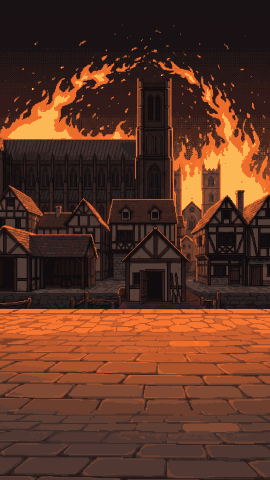
    From an alehouse on Bankside, across the river, Pepys watched the fire stretch across the city in "one entire arch of fire".17

    The London skyline lit by an arch of flame, Old St Paul's dark against it.
    LONDON2 SEP 1666 21:00
  6. 3 to 6 September

    Four days

    The fire burned until 5 or 6 September. It destroyed about 13,200 houses, 87 parish churches and St Paul's Cathedral.3

    Will, afraid
    WILL

    Into the boat, Mary. Don't look back.

  7. Afterwards

    Six recorded deaths

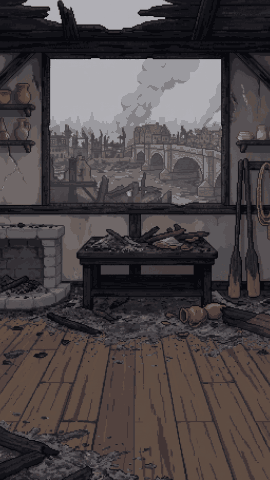
    Officially, six people died. Historians argue the real toll was far higher and will never be known.4

On 4 September, Samuel Pepys dug a pit in his garden.

In it he buried his wine and his parmesan cheese.

Will is fictional. The parmesan is real.

Every line, checked

Each line from the Short that makes a historical claim, beside what the record says.

On screen · opening

A bakery on Pudding Lane is burning. At 3 a.m., Samuel Pepys saw it and went back to bed.
The record

The fire began at Thomas Farriner's bakery off Pudding Lane.2 Pepys's diary says he was woken at about 3 am, thought the fire far enough off, and went back to sleep.1

High
On screen · life
Will, smiling
WILL

Everyone wants a boat today. Good fares on a Sunday!

The record

Pepys saw people throwing their goods into the river and into boats.1 Watermen were the Thames's water taxis.8 Will's good fares are our invention.

High
On screen · the omen
Mary, worried
MARY

Papa, the wind is blowing sparks over the roofs!

The record

A strong wind drove the fire, and Pepys describes a "shower of fire drops" on the river.16

High
On screen · shrug-off
Will, calm
WILL

They'll pull down a few houses. It's always done that way.

The record

Pulling down houses for firebreaks was the standard method. Owners resisted, and it was delayed.2

High
On screen · the event
LONDON2 SEP 1666 21:00
The record

That evening Pepys watched from a Bankside alehouse as the fire formed "one entire arch of fire".17 The hour on screen is ours; the diary says evening.

High
On screen · chaos

It burned for four days. 13,200 houses were lost.

The record

The fire burned from 2 September until 5 or 6 September and destroyed about 13,200 houses.3

High
On screen · aftermath

Officially, six people died. Nobody knows the true number.

The record

Six deaths were recorded. Historians argue the true toll was far higher and will never be known.4
High
On screen · fact card

In it he buried his wine and his parmesan cheese.

The record

Pepys's diary for 4 September records that he and Sir William Penn dug a pit in the garden, where he put his wine and his Parmesan.15

High

Open question

Open question

What happened to the parmesan?

Pepys's house survived the fire, and he dug his wine back up afterwards. His diary never says what became of the cheese.15

Unknown

Think about it

  1. Pepys went back to bed at 3 am. With what he knew then, was that a reasonable decision?
  2. Everyone knew pulling down houses could stop a fire. Why might it still have been delayed?
  3. Only six deaths were recorded. Whose deaths might a city's records miss, and why?
  4. Pepys chose to save wine and cheese. What can the things people save in a crisis tell historians about them?

Glossary

Waterman
A boatman who rowed passengers across and along the Thames, like a water taxi.
Lighterman
A boatman who carried goods on flat barges called lighters.
Firebreak
A gap cleared to stop a fire spreading. In 1666 it meant pulling houses down.
Wherry
The light rowing boat watermen used.
Bankside
The south bank of the Thames, opposite the City.
City of London
The old walled city, about a square mile, where most of the damage was done.

Sources

  1. [1]
    National Archives: extracts from Samuel Pepys's diary
    Primary source

    Pepys's own words on the fire, day by day, with teaching notes.

  2. [2]
    History Hit: How did the Great Fire of London start?
    Magazine

    The bakery, the first hours and the delay over firebreaks.

  3. [3]
    History.com: When London burned
    Magazine

    The fire's course and the scale of the damage.

  4. [4]
    Londonist: Is it true only six people died in the Great Fire?
    Magazine

    Why historians doubt the official death toll.

  5. [5]
    British Food History: Samuel Pepys's parmesan
    Food history

    The cheese, the pit and what Parmesan meant in 1666.

  6. [6]
    Great Fire of London
    Reference

    Overview of the fire, the wind and the aftermath, with further references.

  7. [7]
    Lapham's Quarterly: Pepys on the fire
    Primary source

    A longer extract from Pepys's diary, including the evening on Bankside.

  8. [8]
    Waterman (occupation)
    Reference

    What watermen and lightermen did on the Thames.

Cite this page History's NPCs. "The Great Fire of London (London, 1666): The Parmesan." The Codex, 2026. https://historysnpcs.com/04-great-fire/