History's NPCsCODEX
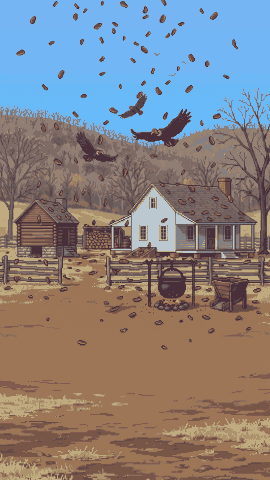
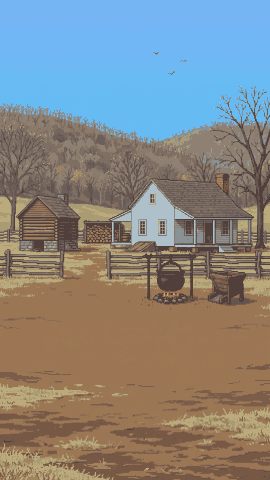
A Kentucky hill farm in early spring: a white clapboard farmhouse with a porch, a log smokehouse, split-rail fences and a black soap kettle over a fire, under a clear blue sky with three vultures circling high.
OLYMPIA SPRINGS3 MAR 1876 10:00

EP.10 · Codex entry

The Kentucky Meat Shower

Kentucky, 1876 · “Not a Cloud”

On 3 March 1876, flakes of meat fell out of a clear sky onto a farm near Olympia Springs, Kentucky. The Short follows Hattie, a fictional farm wife next door, through the hour it happened. This is the history behind it, and the arguments it started.

Field facts

Date
3 March 1876, between about 11 am and noon1
Place
Near Olympia Springs, Bath County, Kentucky, United States
Area
About 90 by 45 metres, for several minutes1
Pieces
Mostly about 5 cm across, at least one about 10 cm12
Sky
"Perfectly clear at the time", the New York Times reported; no rain21
Survives
A vial at Transylvania University's Moosnick Medical and Science Museum, Lexington13

Real and fictional

Fictional Made up for the Short

  • Hattie
    Hattie

    A farm wife living next to the Crouch farm. She stands in for the people whose names we'll never know.

  • Willie
    Willie

    Her son, about nine.

Real Documented

  • A clear sky, and no rain, on the morning of 3 March 1876.21

  • Mrs. Crouch, a farmer's wife, making soap outside when it began.13

  • Flakes of meat that hit with a "snapping-like noise".1

  • Pieces up to 10 cm across, covering the yard and hanging on the fences.12

  • Two men who tasted it and guessed mutton or venison.21

  • Samples sent to scientists in Kentucky, Ohio and New York.1

  • A vial of it that still survives.13

The day, hour by hour

  1. 3 March 1876 · morning

    A clear day

    The sky over Bath County was, in the New York Times' words, perfectly clear. There had been no rain.21

    In one hour, it will rain meat on this farm. The sky is perfectly clear.

  2. Late morning

    Soap day

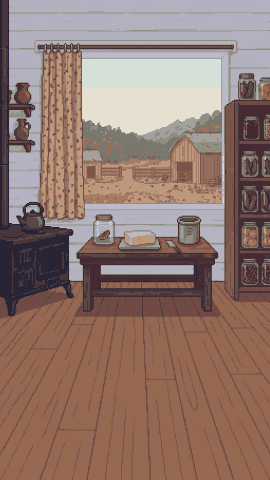
    Mrs. Crouch, a farmer's wife, was outside making soap, a farm job done with fat and lye from wood ash.13

    Hattie, smiling
    HATTIE

    Soap today, pickles tomorrow. Nothing goes to waste on this farm!

  3. About 11 am

    Something hits the roof

    She heard a "snapping-like noise" as something began to strike the ground around her. She later said it was "snowing meat".1

    Willie, worried
    WILLIE

    Ma! Something is slapping the roof!

  4. 11 am to noon

    The meat shower

    For several minutes, flakes of meat fell over an area about 90 by 45 metres. Most were about 5 cm across; they looked like beef and hung on the fences.12

    Dark red flakes falling from a clear blue sky onto a farmyard, a soap kettle and split-rail fences.
    OLYMPIA SPRINGS3 MAR 1876 11:02
  5. That day

    A taste test

    Two men tasted it and guessed mutton or venison. A local grocer said it smelled terrible.21

    Pieces up to 10 cm wide covered the yard. Two men tasted it: mutton or venison, they said.

  6. 1876 and after

    The arguments

    Samples went to scientists in three states. A chemist called it Nostoc, a jelly-like bacterium; microscopists found lung, muscle and cartilage; Dr. L. D. Kastenbine proposed vultures disgorging as they flew. In 2004 a professor found a surviving vial in storage at Transylvania University.123

    Experts blamed algae, then lung tissue. Best guess: vomiting vultures.

Samples went to scientists in Kentucky, Ohio and New York.

A jar of it still survives at Transylvania University.

Hattie is fictional. The meat shower is real.

Every line, checked

Each line from the Short that makes a historical claim, beside what the record says.

On screen · opening

In one hour, it will rain meat on this farm. The sky is perfectly clear.
The record

The shower came between about 11 am and noon, from a sky the New York Times called perfectly clear.12

High
On screen · life
Hattie, smiling
HATTIE

Soap today, pickles tomorrow. Nothing goes to waste on this farm!

The record

Mrs. Crouch was making soap when it began.13 Hattie and her pickles are our invention.

High
On screen · the omen
Willie, worried
WILLIE

Ma! Something is slapping the roof!

The record

Mrs. Crouch described a "snapping-like noise" as it hit.1

High
On screen · shrug-off
Hattie, calm
HATTIE

Can't be hail. There's not a cloud up there.

The record

There had been no rain, which is why later writers rejected the rain-swollen Nostoc theory.1

High
On screen · the event
OLYMPIA SPRINGS3 MAR 1876 11:02
The record

Between about 11 am and noon; the exact minute is not recorded.1

Medium
On screen · break
Willie, afraid
WILLIE

Ma, it's meat! It's raining meat!

The record

Mrs. Crouch said it was "snowing meat".1

High
On screen · chaos

Pieces up to 10 cm wide covered the yard. Two men tasted it: mutton or venison, they said.

The record

Most pieces were about 5 cm, at least one about 10 cm; two unnamed men tasted it and guessed mutton or venison.12

High
On screen · aftermath

Experts blamed algae, then lung tissue. Best guess: vomiting vultures.
The record

Nostoc, lung tissue and vulture vomit were all proposed in 1876; the vulture explanation is the most accepted today, but it is not proven.123

Medium
On screen · fact card

Samples went to scientists in Kentucky, Ohio and New York.

The record

Material went to chemists and microscopists in Kentucky, Ohio and New York.1

High
On screen · fact card

A jar of it still survives at Transylvania University.

The record

A sample in a small vial labelled "Olympia Springs" is kept at the Moosnick Medical and Science Museum, Transylvania University.13

High

Open question

Open question

What was it?

In 1876, Leopold Brandeis called it Nostoc, a cyanobacterium that swells into a jelly in rain; critics pointed out it hadn't rained. Microscopists identified lung, muscle and cartilage. Dr. L. D. Kastenbine argued that vultures, which can throw up their meals to lighten themselves or in defence, disgorged it as they flew.12

Modern DNA tests on the surviving vial were inconclusive: too old and contaminated, though closest to goat.13

Contested

Think about it

  1. Witnesses, chemists and doctors all looked at the same flakes and reached different answers. Why?
  2. Two men tasted it. What would you have wanted to know first?
  3. The vulture theory explains a lot but can't be proven. When is an explanation good enough?
  4. A single vial survived 128 years in a storeroom. What else might be sitting forgotten in museum collections?

Glossary

Lye
A strong alkali made by soaking wood ash in water, used to make soap from fat.
Nostoc
A cyanobacterium that forms jelly-like blobs when wet, once called a blue-green alga.
Vulture
A large bird that eats dead animals; black and turkey vultures both live in Kentucky.
Microscopist
A scientist who studies samples under a microscope.
Specimen
A sample kept for study.

Sources

  1. [1]
    Kentucky meat shower
    Reference

    The event, the witnesses, every 1876 theory and the surviving sample, with the original newspaper and journal references.

  2. [2]
    Scientific American: The Great Kentucky Meat Shower mystery unwound by projectile vulture vomit (2014)
    Magazine

    Bec Crew on the New York Times report, the tasters, the lab findings and why vultures vomit.

  3. [3]
    WEKU / WKMS: Kentucky meat shower 150th anniversary draws hundreds to Bath County (2026)
    News

    Public radio on the 150th anniversary, the surviving sample and the DNA results.

Cite this page History's NPCs. "The Kentucky Meat Shower (Kentucky, 1876): Not a Cloud." The Codex, 2026. https://historysnpcs.com/10-meat-shower/