
On screen · opening
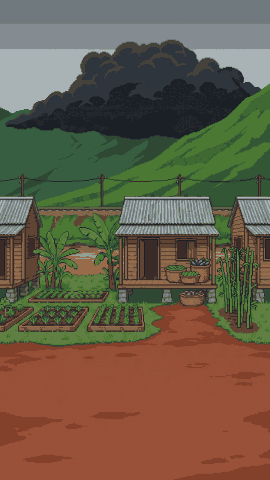
It starts raining at three. By morning, the dam upriver will be gone.
EP.08 · Codex entry
Durban, 1905 · “Paradise Valley”
In the early hours of 1 June 1905, a record storm broke the dam that held Durban's water, and the flood swept down the Umbilo valley onto the homes of Indian market gardeners. The Short follows Muniamma, a fictional market gardener on the riverbank, from the afternoon the rain began to the night the water came. This is the history behind it.
Families in Durban today descend from people who lived through this night. This entry keeps to documented facts and says where the accounts disagree.

A market gardener on the Umbilo, one of the many Indian families, often formerly indentured, who farmed the river flats. She stands in for the people whose names we'll never know.

Her son, about nine.
A waterworks on the Umbilo River, finished in 1887 to supply Durban.34
Torrential rain and hail from the afternoon of 31 May 1905.12
397 mm of rain at Pinetown in 15 hours, still the region's record.1
A railway bridge blocked by debris that gave way, and a storage dam that failed.31
A flood down the Umbilo and Mhlatuzana valleys onto the homes of Indian families.12
A dam that was never rebuilt, whose ruins lie in Paradise Valley Nature Reserve.34
The town council bought land above the Umbilo waterfall in 1884 and finished a storage dam and a settling dam in July 1887. Pipes carried the water about 12 km toward Durban.34
Durban drinks from the dam up the valley. So do my beans!
Torrential rain and hail swept in from the afternoon of 31 May and spread across Natal. Pinetown's gauge would measure 397 mm between 3 pm and 6 am.12

Amma, hail! And the river is over the path!
Logs, bamboo and debris piled up against the railway bridge at Pinetown. Earlier storms on the river had passed without disaster.35

Storms come, storms go. The river always falls by morning.
The railway bridge gave way and the surge hit the storage dam, which failed and released about 150 megalitres down the valley. One reconstruction puts the breach at about 1:45 am and the flood at South Coast Junction about 25 minutes later.35
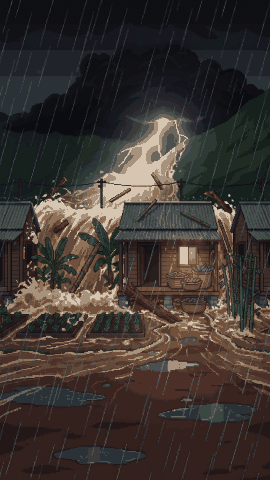
The water swept away homes along the Umbilo and Mhlatuzana, most of them belonging to Indian families. A Hindu temple on the Umhlatuzana was wrecked.12
Hundreds drowned in these valleys that night, most of them Indian families.
Durban had other water supplies by then, so the dam was never rebuilt. Its ruins, from the dam wall to the filter beds, lie in Paradise Valley Nature Reserve, a provincial heritage site.34
Its ruins lie in a nature reserve called Paradise Valley.
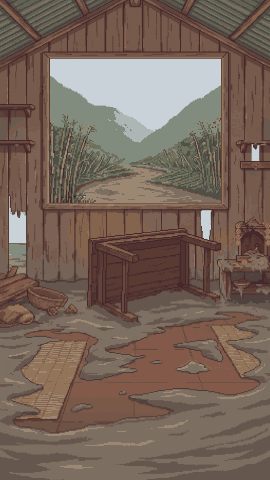
The dam was never rebuilt. Durban had found other water by then.
Its ruins lie in a nature reserve called Paradise Valley.
Muniamma is fictional. The broken dam is real.
Each line from the Short that makes a historical claim, beside what the record says.
It starts raining at three. By morning, the dam upriver will be gone.
Durban drinks from the dam up the valley. So do my beans!
Amma, hail! And the river is over the path!
Storms come, storms go. The river always falls by morning.
By one reconstruction, earlier storms on the river had been manageable.5 Her words are our invention.
MediumOne reconstruction puts the breach at about 1:45 am and the flood at South Coast Junction at about 2:10 am.5
MediumIn Pinetown, 397 mm of rain fell in 15 hours. No storm here has beaten it since.
Hundreds drowned in these valleys that night, most of them Indian families.
The dam was never rebuilt. Durban had found other water by then.
Its ruins lie in a nature reserve called Paradise Valley.
One account, drawn from Laljeeth Ramdhani's 1984 study, says Durban's council and mayor denied that the dam caused most of the deaths and gave no aid to those affected, while a government inquiry found the burst waterworks was the main cause.5
The same account says the river had never been managed for floods and the railway bridge at Pinetown was too narrow for one.5 How much of the loss the dam caused, and who should have seen it coming, the surviving record does not settle.
MediumPeer-reviewed flood history built from contemporary newspapers: the 1905 rainfall record, the waterworks failure and the toll.
A Durban historian's account of the 1905 storm across Natal, drawing on The Mercury.
The waterworks' history and the 1905 failure, with help from the Pinetown Museum and the reserve.
The reserve and the waterworks ruins, citing a heritage assessment; flagged by Wikipedia for possible machine-written text.
An hour-by-hour retelling of the night by a Durban writer, based on Laljeeth Ramdhani's 1984 study of the 1905 floods; used here for times and the official count.
History's NPCs. "The Umbilo Dam Burst of 1905 (Durban, 1905): Paradise Valley." The Codex, 2026. https://historysnpcs.com/08-paradise-valley/